What makes an insulator
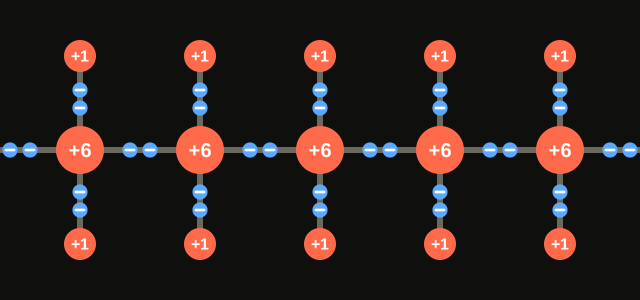
An insulator holds every outer electron in a bond between two atoms, so it has almost no loose electrons to carry current. You put rubber, glass, air, or copper between two metal plates and raise the test voltage. Too much voltage tears electrons loose, and the insulation breaks down.
Open the visualFree, no sign-up. Works on a phone, tablet, computer, or projector.
What to try
- 1Start on Rubber at 120 V. Loose electrons reads Almost none, and Breaks down at reads 20,000 V.
- 2Set Test voltage to 40,000 V. The voltage tears electrons from their bonds, the rubber burns through, and Breaks down at reads Ruined.
- 3Set Test voltage back to 120 V. The burned path conducts now, so the test set shuts off. Damaged insulation cannot be trusted, and that is why you test before you touch.
See something wrong? Tell us and we will check it against the code.
More visuals
- A circuit is a loopCurrent flows only when it has a full path out and back. Open the switch or break a wire and watch it stop.
- Inside an atomEverything is made of atoms. Count the protons in the center and the electrons around it, then take one electron away.
- Opposite charges attractTwo like charges push apart, and two opposite charges pull together. Bring the balls closer and the force gets stronger.