How a transformer works
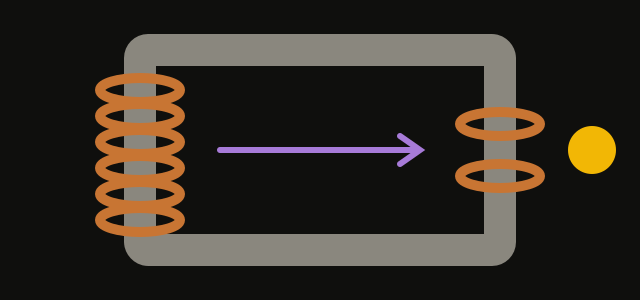
A transformer has two coils of wire on one iron core, and the coils are not wired to each other. AC in the first coil makes a changing field, and that field makes a voltage in the second coil. You change the turns ratio and the lamps and watch the voltage and current.
Open the visualFree, no sign-up. Works on a phone, tablet, computer, or projector.
What to try
- 1Start on 5 to 1 with one lamp. The primary gets 120 volts, and the secondary makes 24 volts.
- 2Set Lamps to Two. Both coils carry twice the current, and the power out still matches the power in.
- 3Pick Battery (DC). The field builds up once, so the secondary gets one short pulse and then nothing. Never put DC on a transformer.
NEC 2026 sections it covers
- 120.5(A)
- 120 V is a nominal system voltage.
Section numbers only. Read the full text in your code book. Temperatures and times in the visual are teaching models.
See something wrong? Tell us and we will check it against the code.
More visuals
- A circuit is a loopCurrent flows only when it has a full path out and back. Open the switch or break a wire and watch it stop.
- Conductors and insulatorsPut copper, aluminum, rubber, or skin on the meter and see how hard each one makes it for current to get through.
- Volts, amps, and ohmsChange the voltage or the heater and watch the amps follow. Amps equal volts divided by ohms.