Why you get shocked
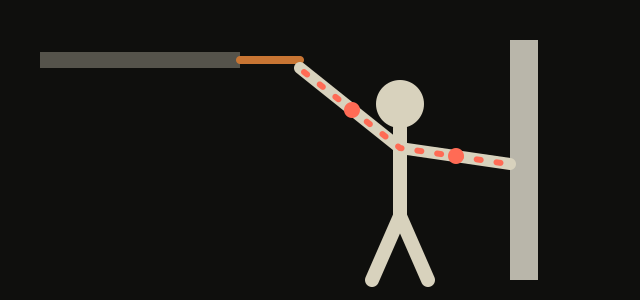
Voltage is always between two points, and a shock happens when your body joins them. You touch a bare hot wire, a metal pipe, and a wet floor, and see how little current it takes to kill.
Open the visualFree, no sign-up. Works on a phone, tablet, computer, or projector.
What to try
- 1On Plain breaker, set Hand to On the hot. With your feet on the ladder and the other hand away, no current flows.
- 2Set Other hand to On the pipe, then set Skin to Wet. The current climbs into the range that can kill, and the 20 A breaker stays on.
- 3Pick GFCI breaker and try it again. The GFCI sees current missing and shuts off. Press Reset to turn it back on.
NEC 2026 sections it covers
- 210.8(A)
- Basement receptacles in a home need GFCI protection.
- 250.104(A)(1)
- A metal water pipe is bonded at the service.
- 240.4(D)
- 12 AWG copper gets a 20 A breaker at most.
Section numbers only. Read the full text in your code book. Temperatures and times in the visual are teaching models.
See something wrong? Tell us and we will check it against the code.
More visuals
- A circuit is a loopCurrent flows only when it has a full path out and back. Open the switch or break a wire and watch it stop.
- Conductors and insulatorsPut copper, aluminum, rubber, or skin on the meter and see how hard each one makes it for current to get through.
- Volts, amps, and ohmsChange the voltage or the heater and watch the amps follow. Amps equal volts divided by ohms.