AC and DC
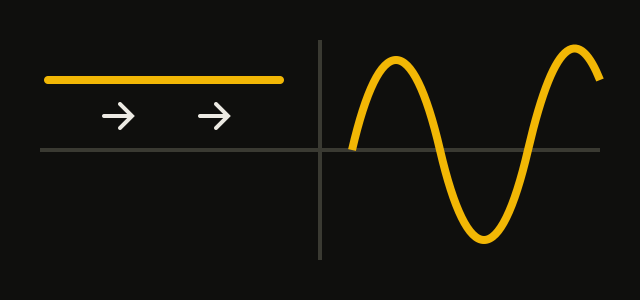
A battery pushes current one way, all the time. A wall receptacle pushes it one way, then the other, 60 times a second. You slow time down and watch the charges move back and forth in place.
Open the visualFree, no sign-up. Works on a phone, tablet, computer, or projector.
What to try
- 1On Battery (DC), the dots run one way around the loop and the voltage at the lamp stays the same.
- 2Pick Receptacle (AC) and set Speed to Slowest. The voltage rises, falls, and turns around, and the dots move back and forth in place.
- 3Press Pause and drag the Time slider to the top of the wave. The voltage peaks near 170 volts, but it heats the lamp the same as 120 volts DC.
NEC 2026 sections it covers
- 120.5(A)
- 120 V is a nominal system voltage.
- 210.5(C)(3)
- A DC branch circuit over 60 V may be marked red for plus and black for minus.
Section numbers only. Read the full text in your code book. Temperatures and times in the visual are teaching models.
See something wrong? Tell us and we will check it against the code.
More visuals
- A circuit is a loopCurrent flows only when it has a full path out and back. Open the switch or break a wire and watch it stop.
- Conductors and insulatorsPut copper, aluminum, rubber, or skin on the meter and see how hard each one makes it for current to get through.
- Volts, amps, and ohmsChange the voltage or the heater and watch the amps follow. Amps equal volts divided by ohms.